Horse genome 700,000 years old sequenced
On Jun. 26, 2013, scientists announced they have sequenced the oldest genome to date—and shaken up the horse family tree in the process. Ancient DNA derived from a horse fossil that’s between 560,000 and 780,000 years old suggests that all living equids—members of the family that includes horses, donkeys, and zebras—shared a common ancestor that lived at least 4 million years ago, approximately 2 million years earlier than most previous estimates. The discovery offers new insights into equine evolution and raises the prospect of recovering and exploring older DNA than previously thought possible.
The study began with a walk in the permafrost. Evolutionary biologist Eske Willerslev of the University of Copenhagen joined a team of geologists on a 2003 expedition in Canada’s Yukon Territory. The group was exploring a site that holds ice and volcanic ash that date back more than 700,000 years. There, Willerslev spotted a piece of bone jutting from the frozen ground and decided he would study it.
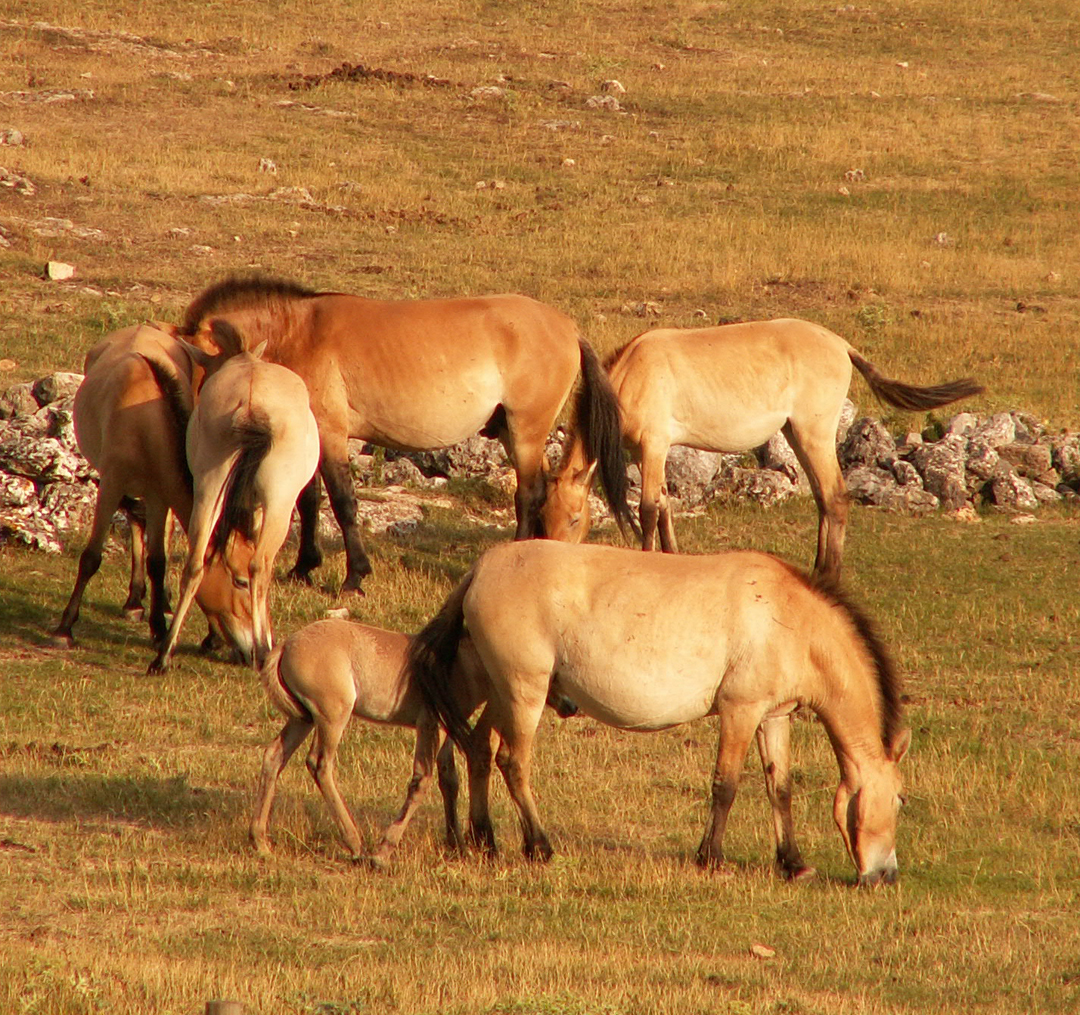
By comparing mutations across all the samples, the team determined that the fossil came from a male horse that lived about 700,000 years ago and most likely shared a common ancestor with the rest of the Equus lineage—all donkeys, horses, zebras—about 4 million to 4.5 million years ago. That finding alone may help settle a long-standing debate over Equus origins. Experts disagree over the timeline of equine evolution and have posited that the last common Equus ancestor lived anywhere between 2 million and 6 million years ago.But the data, published online in Nature, also solve another mystery. They suggest that the Przewalski’s horse hasn’t mingled genetically with domestic horse breeds, confirming that this endangered native of the Mongolian steppes really is distinct from its domesticated cousins.
Tags:
Source: American Association for the Advancement of Science
Credit: Photo: Herd of Przewalskii_horses. Courtesy: Wikipedia.