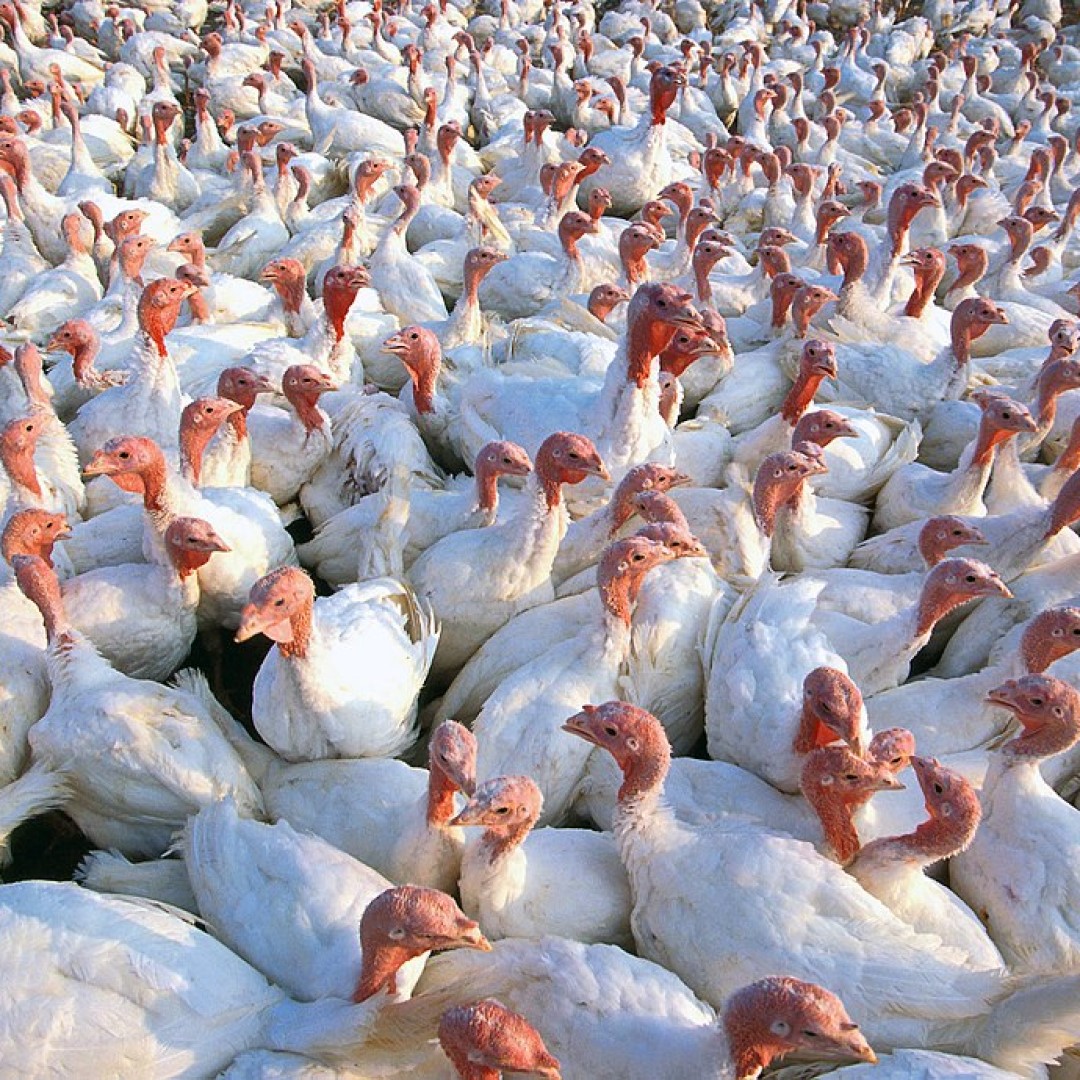
USDA confirmed highly pathogenic H7N3 avian influenza in a commercial flock in Chesterfield County, South Carolina
On Apr. 9, 2020, the U.S. Department of Agriculture (USDA) confirmed the presence of highly pathogenic H7N3 avian influenza (HPAI) in a commercial turkey flock in Chesterfield County, South Carolina. This was the first confirmed case of HPAI in commercial poultry in the United States since 2017.
The avian flu is not related to the COVID-19 outbreak and presents no immediate human health concern, they said. No human cases have been detected. It is the first confirmed case of HPAI in commercial poultry in the United States since 2017.
The U.S. Department of Agriculture’s Animal and Plant Health Inspection Service (APHIS) said it appears the H7N3 strain of HPAI mutated from a low-pathogenic strain that had been found in poultry recently in the same area of North and South Carolina.
The Clemson University Veterinary Diagnostic Center tested samples from the affected flock; the positive identification then was confirmed April 8 at the APHIS National Veterinary Services Laboratories in Ames, Iowa. Additional analysis of the virus is ongoing. USDA will compensate owners for any animals depopulated as part of the control efforts.
As part of existing avian influenza response plans, federal and state agencies are working jointly on additional surveillance and testing in the nearby area. “The United States has the strongest AI surveillance program in the world and USDA is working with its partners to actively look for the disease in commercial poultry operations, live bird markets and in migratory wild bird populations,” APHIS said in a statement.
USDA is reporting the finding to the World Organisation for Animal Health as well as to international trading partners. The new HPAI case follows a discovery of low-pathogenic avian influenza (LPAI) after routine testing as part of normal production in March on three farms in North Carolina’s Union and Anson counties.
Avian influenza is caused by an influenza type A virus which can infect poultry — such as chickens, turkeys, pheasants, quail, domestic ducks, geese and guinea fowl — and is carried by free-flying waterfowl such as ducks, geese and shorebirds. AI viruses are classified by a combination of two groups of proteins: hemagglutinin or “H” proteins, of which there are 16 (H1–H16), and neuraminidase or “N” proteins, of which there are 9 (N1–N9).
Tags:
Source: Clemson News
Credit: