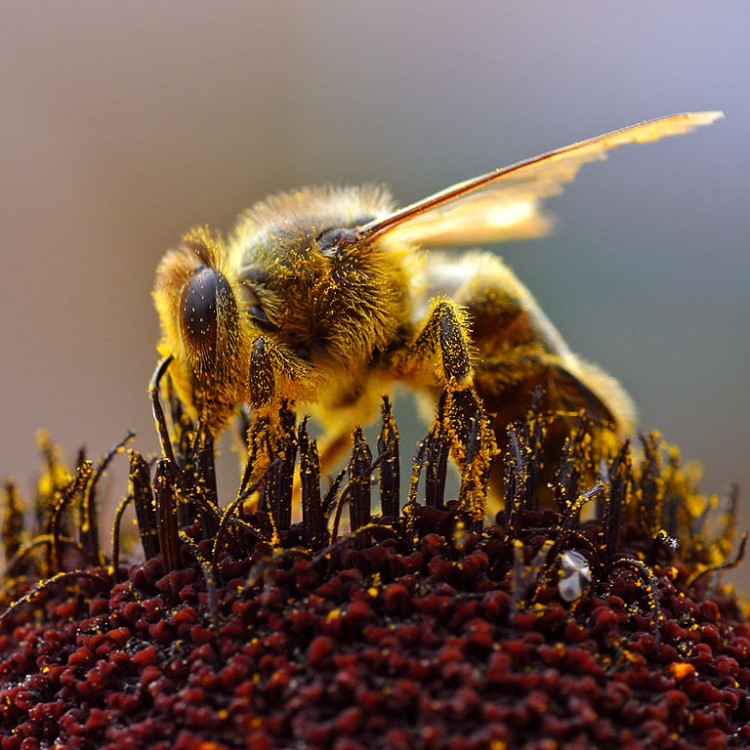
USDA researchers used edible blue-green algae to protect honey bees against viruses
On Mar. 19, 2024, scientists at the United States Department of Agriculture (USDA)’s Agricultural Research Service (ARS) announced they had developed an edible antiviral treatment that can be used to protect honey bees against Deformed Wing Virus (DWV) and other viruses, according to a recent study published in Sustainable Agriculture.
Honey bees are important agricultural pollinators. However, viruses, including DWV, are linked to the deaths of millions of colonies worldwide. DWV, like other viruses, is most often spread by Varroa mites who carry the disease inside them and infect bee colonies. Infection typically causes deformity and death in bees, especially in the pupae and brood. These colony losses devastate beekeeping industries and pose a major risk to agriculture and the global food supply.
While there are medicines for other bee diseases and parasites, there is currently no treatment available to help beekeepers reduce viruses in their colonies. Nearly all colonies have DWV and can often be infected with multiple viruses at any given time. Effective antiviral treatments could help to improve colony health and survival as well as crop pollination efficiency. The researchers filed a patent application for the technology and plan to use variations of it to target additional bee viruses and other pathogens in future studies.
Tags:
Source: U.S. Dept. of Agriculture
Credit: